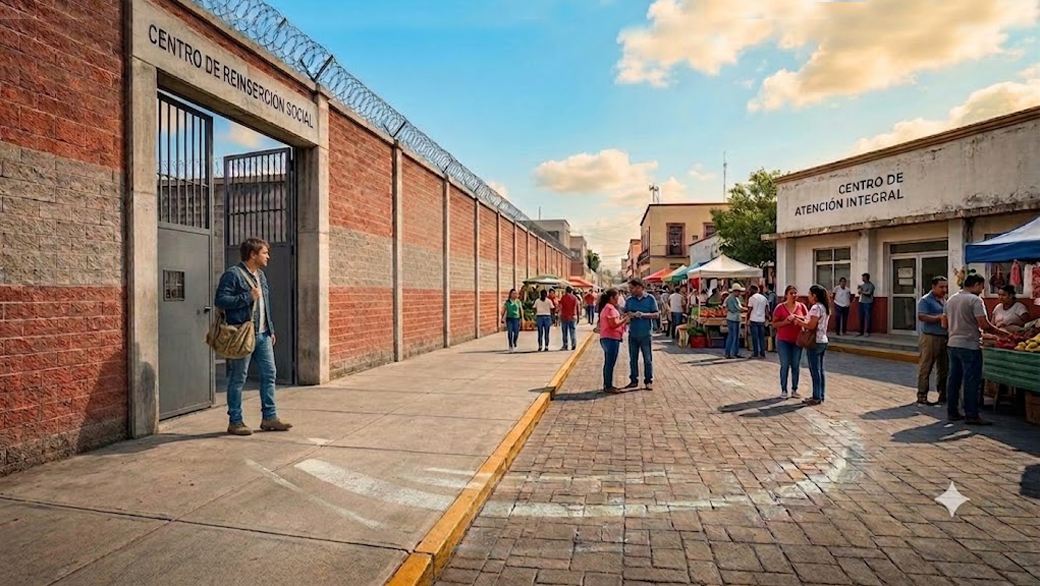
The institutionalization of the social reintegration process
DOI:
https://doi.org/10.29059/rdycsv.v8i2.238Keywords:
Institutionalization, reintegration, status, speech actsAbstract
Institutions are structures of social reality that confer powers, rights, obligations, and responsibilities upon individuals, while also assigning status and functions to certain objects, based on shared recognition, a concept that forms the basis of the first section, according to John Searle. This research analyzes the shaping of the reintegration process in the state of Jalisco, Mexico, between 2020 and 2024, focusing on legal language and examining how this process is configured across various organizations and their interrelationships. The second section employs a qualitative methodology with a hermeneutic approach. To this end, interviews were conducted with various actors and organizations involved in the social reintegration process, alongside a content analysis. This enabled an assessment of organizational cohesion based on formal documents. Finally, the results indicate that the weight of the process rests on formal provisions that are internalized by the involved actors as practices and emotions at an informal level.
References
Agami, T. (2016). Fracaso en los medios para alcanzar la Reinserción Social: Santa Martha Acatitla Tania Agami Sobol. Cuadernos Del Centro De Investigación En Economía Creativa (Ciec), 39. http://www3.centro.edu.mx/cuadernos_investigacion/
Ahumada Alvarado, H. M. y Grandón Fernández, P. (2015). Significados de la reinserción social en funcionarios de un centro de cumplimiento penitenciario. Psicoperspectivas, 14(2), 84–95. https://doi.org/10.5027/PSICOPERSPECTIVAS-VOL14-ISSUE2-FULLTEXT-536 DOI: https://doi.org/10.5027/psicoperspectivas-Vol14-Issue2-fulltext-536
Añaños-Bedriñana, F. T., Llorente Moreno, L. y Chávez Torres, M. (2016). Educación y reinserción de los jóvenes en prisión. Revista de Educación Social, 22. https://eduso.net/res/revista/22/el-tema-experiencias-investigaciones/educacion-y-reinsercion-de-los-jovenes-en-prision-education-and-rehabilitation-of-young-people-in-prison
Arce, R., Novo, M. y Fariña, F. (2014). Cognitive competence among recidivist and non recidivist prisoners: Implications for the rehabilitation. Anales de Psicologia, 30(1), 259–266. https://doi.org/10.6018/analesps.30.1.158201 DOI: https://doi.org/10.6018/analesps.30.1.158201
Arriola, J. F. (2016). Criminología. Factores criminógenos y políticas públicas para la prevención de conductas antisociales (3a.). Trillas.
Austin, J. L. (1982). Cómo hacer cosas con palabras: Conferencias William James pronunciadas en la Universidad de Harvard en 1955. Paidós. (Obra original publicada en 1962).
Binda, H., Weinberg, J., Maetzener, N. y Rubin, C. L. (2020). “You’ re almost in this place that doesn’ t exist”: The Impact of College in Prison as Understood by Formerly Incarcerated Students from the Northeastern United States. 6(2). https://doi.org/10.25771/54ad-9z55
Código Penal Federal. (1931). Cámara de Diputados del H. Congreso de la Unión. (Trabajo original publicado en 1931; última reforma publicada en el Diario Oficial de la Federación, 11 de marzo de 2024). https://www.diputados.gob.mx/LeyesBiblio/pdf/CPF.pdf
Colón Ortiz, D. (2017). Educación tras las rejas: Factores que auxilian y fomentan la participación de confinadas y el cumplimiento de programas educativos en la prisión (Número de publicación 10267044) [Tesis doctoral, Universidad del Turabo]. ProQuest Dissertations and Theses Global.
Córdova Sánchez, C. (2016). Política de reinserción social en México: la cárcel y su potencial para la reincorporación de los delincuentes a la sociedad. Revista Legislativa de Estudios Sociales y de Opinión Pública, 9(18), 105–141.
Constitución Política de los Estados Unidos Mexicanos. (5 de febrero de 1917). Última reforma publicada en el Diario Oficial de la Federación el 22 de marzo de 2024. https://www.diputados.gob.mx/LeyesBiblio/pdf/CPEUM.pdf
Elvira-Valdés, M. A. y Durán-Aponte, E. (2014). Estudiar en mayúsculas: La educación formal en instituciones penitenciarias venezolanas. 64–73. http://www.redalyc.org/articulo.oa?id=413734078006
Gerring, J. (2007). Case Study Research. Principles and practices. Cambridge. University Press. DOI: https://doi.org/10.1017/CBO9780511803123
Habermas, J. (1987). Teoría de la acción comunicativa (M. Jiménez Redondo, Trad.). Taurus. (Obra original publicada en 1981).
Hall, P. A. y Taylor, R. C. R. (1996). Political Science and the Three New Institutionalisms. Political Studies, 44(5), 936–957. https://doi.org/10.1111/j.1467-9248.1996.tb00343.x DOI: https://doi.org/10.1111/j.1467-9248.1996.tb00343.x
Instituto Nacional de Estadística y Geografía. (2021). Encuesta Nacional de Población Privada de la Libertad (ENPOL) 2021: Presentación de resultados. https://www.inegi.org.mx/programas/enpol/2021/
Ioannidou, E., Kiourti, E. y Christofidou, C. (2019). Literacy education in prison: developing a social literacy programme in the prison school of Cyprus. Research Papers in Education, 34(5), 597–620. https://doi.org/10.1080/02671522.2018.1524925 DOI: https://doi.org/10.1080/02671522.2018.1524925
Ley Nacional de Ejecución Penal. (16 de junio de 2016). Cámara de Diputados del H. Congreso de la Unión. Última reforma publicada en el Diario Oficial de la Federación el 12 de junio de 2024. https://www.diputados.gob.mx/LeyesBiblio/pdf/LNEP.pdf
North, D. C. (1995). Instituciones, cambio institucional y desempeño económico. In Lecturas de Economia. Fondo de Cultura Económica. https://doi.org/10.17533/udea.le.n49a4992 DOI: https://doi.org/10.17533/udea.le.n49a4992
Ordaz Hernández, D. y Cunjama López, E. L. (2012). Reinserción social. Inreflexiones de lo anormal. In Prisión, reinserción social y criminalidad. Reflexiones sobre la situación carcelaria y la violencia social en México (pp. 11–32). Editorial Académica Española.
Pompoco, A., Wooldredge, J., Lugo, M., Sullivan, C. y Latessa, E. J. (2017). Reducing Inmate Misconduct and Prison Returns with Facility Education Programs. Criminology and Public Policy, 16(2), 515–547. https://doi.org/10.1111/1745-9133.12290 DOI: https://doi.org/10.1111/1745-9133.12290
Posada Ramírez, J. G., Díaz Arenas, P. F. y Jaramillo Patiño, D. F. (2017). La construcción de la realidad social de John Searle, una ontología social sin imágenes. Anagramas - Rumbos y Sentidos de La Comunicación, 15(30), 183–197. https://doi.org/10.22395/angr.v15n30a9 DOI: https://doi.org/10.22395/angr.v15n30a9
Programa de Secretaría de Seguridad. (2024). Atención Integral a Preliberados y Liberados. Programa de Secretaría de Seguridad. Proyecto de Presupuesto 2024. https://app.nuestropresupuesto.mx/JAL/programa/037-000-536?v=23&i=2022
Rangel Torrijo, H. (2019). Cooperation and education in prison: A policy against the tide in the Latin American penitentiary crisis. International Review of Education, 65(5), 785–809. https://doi.org/10.1007/s11159-018-9747-5 DOI: https://doi.org/10.1007/s11159-018-9747-5
Ritzer, G. (2005). Encyclopedia of Social Theory. In G. Ritzer (Ed.), The Sociology of Law. SAGE Publications. https://doi.org/10.4324/9781315135069-22 DOI: https://doi.org/10.4324/9781315135069-22
Rojas Cervantes, J. M. (2012). The education as an inhibitory factor of minor’s criminal behavior. Archivos de Criminología, Criminalística y Seguridad Privada, IX(9), 6–7. https://dds.cepal.org/redesoc/publicacion?id=4961
Rumbo Bonfil, C. (2013). Los retos del proceso de reinserción social en el Estado. 5(1), 150–173. http://www.redalyc.org/pdf/5177/517751547013.pdf DOI: https://doi.org/10.22335/rlct.v5i1.13
Salvatore, R. (2018). Presos que leen y escriben: alfabetismo útil de trabajadores porteños en prisión (ca.1900-1914) Inmates who read and write: useful literacy of Buenos Aires workers in prison (ca.1900-1914). Amoxtli Journal, 1(1), 1–18. https://doi.org/10.26448/0719-997x/1.1 DOI: https://doi.org/10.26448/0719-997X/1.1
Searle, J. R. (1994). Actos de habla: ensayo de filosofía del lenguaje. In Obras maestras del pensamiento contemporáneo.
Searle, J. R. (1997). La construcción de la realidad social. Paidós.
Secretaría de Seguridad y Protección Ciudadana. (2022). Cuaderno mensual de información estadística penitenciaria nacional. https://Www.Gob.Mx/Cms/Uploads/Attachment/File/882349/CE_2022_08.Pdf
Simons, H. (2009). El estudio de caso: Teoría y práctica. Morata.
Tønseth, C., Bergsland, R. y Hui, S. K. F. (2019). Prison education in Norway – The importance for work and life after release. Cogent Education, 6(1), 1–13. https://doi.org/10.1080/2331186x.2019.1628408 DOI: https://doi.org/10.1080/2331186X.2019.1628408
Wacquant, L. (2012). La reinserción de los presos como mito y ceremonia. Cuadernos Del GESPyDH, 2(2), 31–47. https://core.ac.uk/download/pdf/79472859.pdf#page=28
Williamson, O. E. (2000). New Taking Institutional Economics: Ahead Looking. Journal of Economic Literature, 38(3), 595–613. https://doi.org/10.1257/jel.38.3.595 DOI: https://doi.org/10.1257/jel.38.3.595
Yin, R. K. (2003). Case Study Research. Design and Methods. SAGE publications. https://books.google.es/books?id=BWea_9ZGQMwC&printsec=frontcover#v=onepage&q&f=false
Published
How to Cite
Issue
Section
License
Copyright (c) 2026 Universidad Autónoma de Tamaulipas

This work is licensed under a Creative Commons Attribution-NonCommercial-ShareAlike 4.0 International License.
Accepted 2026-06-18
Published 2026-07-16